About Ann
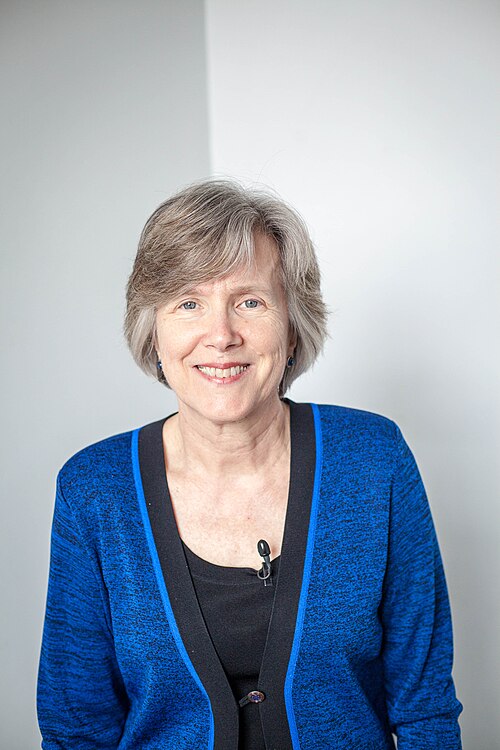
Ann S. Masten (b. January 27, 1951) is a psychologist renowned for her research on how children adapt and thrive in the face of adversity. She is Regents Professor Emerita of Child Development (and Irving B. Harris Professor, 2013–2022) at the Institute of Child Development, University of Minnesota, where she joined the faculty in 1986 and retired from active faculty service in May 2025 (CV).
After earning her B.A. cum laude in Psychology and English at Smith College in 1973 and working as a research assistant in Bethesda, she was inspired by Norman Garmezy — the "grandfather" of resilience science — to move to Minnesota, where she completed her Ph.D. in Clinical Psychology in 1982 and joined his pioneering work on resilience.
Her research program, Project Competence on Risk and Resilience, has studied positive adaptation among children facing poverty, homelessness, war, disaster, and migration.
Latest Research & Awards (2024–2026)
2026 — The multisystem-resilience brief AI funders need
Her newest paper — "Young people are living in unprecedented times: too much chaos or too little resilience?" (Child and Adolescent Mental Health, 2026) — argues that protecting young people in perilous times requires bolstering multisystem resilience, not just mitigating risk: exactly the framework a funder facing AI-driven family disruption needs. Read the paper ↗
2025 — APF Gold Medal for Impact in Psychology
The American Psychological Foundation honored her with its 2025 Gold Medal for Impact in Psychology for "groundbreaking and sustained research on resilience" — the field's clearest signal that ordinary magic is the evidence base of record. APF announcement ↗
2025 — Ordinary Magic, Second Edition
The fully updated second edition expands the framework to the global threats of this decade — climate change, war, poverty, racial injustice, pandemics — the same cascading, multisystem disruptions the AI transition joins. Guilford Press ↗
The Big Idea: Ordinary Magic
Masten's signature insight, developed in the 1990s and crystallized in her most widely cited paper (per OpenAlex), "Ordinary Magic: Resilience Processes in Development" (American Psychologist, 2001), overturned the idea that resilient children are rare or superhuman. Resilience, she showed, grows from common, ordinary resources — the "ordinary magic" of human adaptational systems.
Caregiving adults
Close relationships with competent, caring parents and other adults are among the most powerful protective systems.
Problem-solving skills
Executive function, self-regulation, and a hopeful, resourceful mindset help children navigate challenge.
Connection & community
Friends, schools, culture, and effective institutions nurture and restore the magic in daily life.
How AI Can Improve the Lives of Resilient Children
Dr. Masten's research maps the protective systems that keep children thriving through adversity — caring adults, problem-solving skills, connection and community. AI-era tools, used with human care, could strengthen every one of them:
Earlier identification, sooner support
AI-assisted screening could flag early signals of adversity her science knows best — school mobility, homelessness, disaster exposure — so counselors and caring adults reach children before struggles deepen. People, not algorithms, stay in the loop.
Learning that follows the child
Adaptive tutoring could travel with highly mobile students from school to school, keeping personalized support for executive function, self-regulation, and problem-solving continuous — even across mid-year moves and disruptions.
Access in every family's language
Real-time translation can connect refugee and immigrant families to community supports in their own language — removing one of the most ordinary barriers between children and the help resilience science shows works.
Evidence-based guidance at scale
AI assistants trained on validated frameworks — like her free Coursera curriculum — could put ordinary-magic guidance in the hands of every parent, teacher, and caseworker the moment they need it.
Funding the protective systems
AI-era wealth itself is an instrument: foundations, family offices and corporate philanthropy programs, including the charitable arms of technology and AI companies, could finance the caring adults, stable homes, and effective schools her research proves matter.
Guardrails: children first
These tools only help if equity, privacy, and human oversight are built in — screening must never label or limit a child, and family data must never be used against them. Systems work when they protect, not sort.
This section is an independent synthesis of how AI-era tools could amplify Dr. Masten's findings — not a program of her lab. Real-world use requires research, community consent, and oversight.
The Science in Action
Ordinary magic is not a theory waiting for proof — it is already working in policy, classrooms, and homeless-family programs. This is the track record a funder inherits:
Validated at population scale
The executive-function screening tools her lab helped develop are part of Minnesota's mandatory early-childhood screening — resilience measurement already deployed statewide, not a promise.
Homework Starts with Home
Her lab runs live community partnerships — including Homework Starts with Home, tackling student homelessness alongside Minnesota Housing and the Minnesota Department of Education.
Federally funded for four decades
Continuous research support from the National Science Foundation, the National Institute of Mental Health, the U.S. Department of Housing and Urban Development, and the William T. Grant Foundation.
From Minnesota to the world
Co-chair of the Institute of Medicine's Forum on Investing in Young Children Globally, U.S. delegate at the International Congress of Psychology, and speaker at the United Nations' Psychology Day.
Career Highlights
- 1973 — B.A. in Psychology and English, cum laude, Smith College
- 1976 — Leaves NIH to study with resilience pioneer Norman Garmezy at Minnesota
- 1982 — Ph.D. in Clinical Psychology, University of Minnesota
- 1986 — Joins the faculty of the Institute of Child Development
- 2001 — Publishes "Ordinary Magic," her landmark American Psychologist paper
- 2013 — Appointed co-chair of the Institute of Medicine's Forum on Investing in Young Children Globally
- 2014 — Receives the APA Urie Bronfenbrenner Award for Lifetime Contributions; publishes Ordinary Magic: Resilience in Development
- 2016–17 — U.S. delegate at the International Congress of Psychology (Yokohama); speaker at the UN's 10th Annual Psychology Day
- 2024 — Wins the University of Louisville Grawemeyer Award in Psychology for the idea of "ordinary magic"; elected to the American Academy of Arts and Sciences
- 2025 — Receives the APF Gold Medal Award for Impact in Psychology; publishes the fully updated Ordinary Magic: Resilience in Development (Second Edition)
- 2026 — Publishes her multisystem-resilience debate in Child and Adolescent Mental Health: protecting youth in unprecedented times requires building resilience, not only mitigating risk
Why This Work Matters
Masten's work replaces deficit-focused models of childhood with an evidence-based optimism: given ordinary supports — loving adults, safe homes, good schools — children's capacity to bounce back is the rule, not the exception. Her message has shaped parenting, education, humanitarian policy, and her popular Coursera course "Resilience in Children Exposed to Trauma, Disaster and War." She has also served as president of both the Society for Research in Child Development and APA Division 7.
Read her: Ordinary Magic: Resilience in Development (2014), and the co-edited volume Resilience in Children.
Read, Watch, Learn
📘 The Book — New 2nd Edition (2025)
Ordinary Magic: Resilience in Development, Second Edition (Guilford Press, 2025) is fully updated with an expanded conceptual framework and a more global view of threats to development — climate change, war, poverty, racial injustice, and pandemics. A landmark for researchers, practitioners, students, and policy makers.
As podcast host Aliza Pressman put it: "I wish I could tell you how major Ann Masten is in this field — she's like the Meryl Streep of resilience."
🎓 Free MOOC on Coursera
"Resilience in Children Exposed to Trauma, Disaster and War: Global Perspectives" — six weeks of free video lectures from Professor Masten, covering protective factors, the adaptive systems behind "ordinary magic," and a resilience framework for designing interventions. Enroll free on Coursera.
🏅 Recent Honors
2024 Grawemeyer Award in Psychology for the idea of ordinary magic · Elected to the American Academy of Arts and Sciences (2021) · 2014 APA Urie Bronfenbrenner Award · Past President, Society for Research in Child Development · Over 300 scholarly publications.
Watch & Learn — Ann Masten on Video
Her core ideas in her own words — three verified recordings spanning her signature public talk, a national psychology interview, and a full university research lecture:
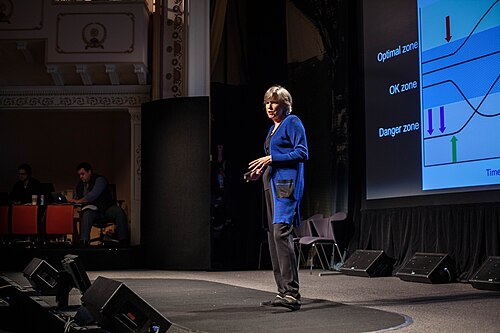
Inside resilient children — PopTech 2012
Her signature public talk on the adaptive systems behind ordinary magic. · Watch on YouTube ↗
Resilience in the face of COVID-19 — APA
The American Psychological Association's interview on family resilience through the pandemic. · Watch on YouTube ↗
Resilience Processes in Development — UCTV
A full University of California research lecture on early-life adversity, cognition, and the meaning of resilience. · Watch on YouTube ↗
Research Papers
Read the science directly — publicly available papers, lectures, and chapters by Dr. Masten, each link verified live:
-
2001American PsychologistLandmark
Ordinary Magic: Resilience Processes in Development
The paper that reframed resilience science: resilience arises from ordinary adaptational systems, not rare traits.
Read PDF ↗ -
Invited lectureMelissa InstituteSynthesis
Resilience in Development: The Power of Ordinary Magic
Her synthesis of four decades of findings on why some children thrive through extraordinary adversity.
Read PDF ↗ -
2014Child DevelopmentGlobal
Global Perspectives on Resilience in Children and Youth
The international case for resilience investment — from disaster zones to refugee communities.
Read PDF ↗ -
2009Education CanadaPractitioner
Ordinary Magic: Lessons from Research on Resilience
A practitioner-friendly summary of the core lessons for teachers, schools, and anyone raising children.
Read PDF ↗ -
Sample chapterGuilford PressThe Book
Ordinary Magic — Preface & Chapter 1
Free excerpt from the Guilford Press edition: where the ordinary-magic framework begins.
Read PDF ↗ -
2026Child & Adolescent Mental HealthNewest
Too Much Chaos or Too Little Resilience? (Debate)
Her newest published argument: protecting young people in unprecedented times calls for bolstering multisystem resilience as well as mitigating risk.
Read paper ↗ -
BibliographyCurated by the authorReading list
Resources by Dr. Ann Masten
Her own recommended readings and resilience resources — the author's curated starting library.
Read PDF ↗
The Resilience Notebook
A notebook-style study companion for resilience science: every note is grounded in a linked primary source, and the whole notebook is searchable — the reading method researchers actually use, applied to her work. The complete evidence base lives on her Google Scholar profile; her OpenAlex profile lists 62,753 citations as of October 29, 2026.
7 study notes
The core finding
Resilience arises from ordinary adaptational systems — not rare traits or exceptional children. This single reframing, from her landmark 2001 paper, launched modern resilience science.
Grounded in: Ordinary Magic (2001) — PDF ↗ · Google Scholar ↗
The short list of protective systems
Caregiving adults, self-regulation and problem-solving skills, and connection to family, school, culture, and community — the ordinary systems that do the heavy lifting when adversity hits.
Grounded in: Ordinary Magic, 2nd ed. (Guilford) ↗ · Coursera MOOC ↗
What the second edition adds
The 2025 edition widens the lens to cascading global threats — climate change, war, poverty, racial injustice, pandemics — the same multisystem disruptions the AI transition joins.
Grounded in: Guilford Press ↗
The 2026 argument
Her newest paper argues that protecting young people in unprecedented times requires bolstering multisystem resilience — building the systems that absorb chaos — not only mitigating individual risks.
Grounded in: Child & Adolescent Mental Health (2026) ↗
Generative AI × children — the double-edged helper
AI-assisted screening, tutoring that follows mobile students, and real-time translation could each strengthen a protective system her science has mapped — but only with equity, privacy, and human oversight as non-negotiable guardrails. Independent synthesis grounded in her frameworks, not a program of her lab.
Grounded in: CAMH 2026 ↗ · MOOC ↗
Resilience is a system property, not a child trait
The practical implication: invest in the systems around children — homes, schools, neighborhoods, relationships — rather than programs that label some children "resilient" and others not.
Grounded in: Ordinary Magic: Lessons from Research (2009) ↗ · 2001 paper ↗
The study path: how to read the science
The notebook method, in order: the 2001 paper first, then the free preface and chapter one, then the Coursera course — keeping Scholar open as the master index for every claim you meet.
Grounded in: 2001 PDF ↗ · Book excerpt ↗ · MOOC ↗
An independent study aid inspired by notebook-style research tools — notes link to primary sources only; nothing here is generated by or endorsed by Dr. Masten's lab.
Follow the Science — Official Sources
Every primary source for Dr. Masten's public work, each link verified live. Start here — not with secondhand summaries:
-
OfficialUMN
UMN Institute of Child Development profile
Her official University of Minnesota home — publications, projects, and contact channels.
icd.umn.edu/ann-masten ↗ -
OfficialUMN
UMN expert directory page
The university's public-experts listing for journalists and funders.
twin-cities.umn.edu ↗ -
HonorsUMN
Regents Professor citation
The university's official honors biography behind her highest faculty title.
uawards.umn.edu ↗ -
Research62,753 citations · OpenAlex, Oct 29, 2026
Google Scholar
Her complete publication list with citation counts — the full bibliography.
scholar.google.com ↗ -
ResearchVerified ID
ORCID
Verified researcher ID 0000-0003-2871-7508 — the persistent digital identifier for her work.
orcid.org ↗ -
Research297 publications
ResearchGate
Publications with direct researcher contact for collaboration inquiries.
researchgate.net ↗ -
WatchPopTech 2012
"Inside resilient children" — PopTech talk
Her signature public talk on the adaptive systems behind ordinary magic, on YouTube.
youtube.com ↗ -
LearnFree
Coursera MOOC — Resilience in Children Exposed to Trauma, Disaster and War
The free six-week global course: protective factors, adaptive systems, and intervention design.
coursera.org ↗ -
Read2nd edition
Ordinary Magic — Guilford Press
The book itself, Second Edition (2025), direct from the publisher.
guilford.com ↗ -
FeatureUMN
CEHD Connect — "Ordinary magic"
The university's in-depth feature story on her career and legacy.
connect.cehd.umn.edu ↗
Invest in Ordinary Magic: This Site's Funding Vision
An independent proposal. Everything in this section and the Initiative below is this site's own idea and its own ask. Dr. Masten and the University of Minnesota have not requested, reviewed, or endorsed it, and Dr. Masten is not raising money here or through this site.
As AI reshapes the economy, families and children will feel the disruption first. Dr. Masten's research offers exactly the evidence base funders need: resilience is not a rare trait but a set of ordinary, buildable systems — caring adults, stable homes, effective schools, and supportive communities. When economic shock hits households, these are the systems that determine whether children adapt and thrive.
Why her work fits the moment
Funders who care about how economic change reaches families — private and family foundations, and corporate giving programs, including those of technology and AI companies — need evidence about what protects children. Masten’s resilience science, from homeless families in Minnesota to refugee youth in Europe, shows how to protect child development amid economic adversity, and her 2026 multisystem-resilience paper summarizes that evidence.
What funding could do (this site's suggestions)
• Scale resilience-screening and support in schools facing job-loss communities
• Fund longitudinal studies of children in AI-disrupted households
• Translate Project Competence findings into policy and direct interventions
• Extend her free global resilience education to displaced families
Get involved
No funder has a grant program for this proposal, and none is a partner of this site. Supporters can champion Masten’s work today: buy the book, share the free course, and encourage foundations and corporate giving programs that support children to include university-based resilience science.
FAQ — Dr. Ann Masten, PhD, resilience & philanthropy for children
Who is Dr. Ann Masten, PhD?
Dr. Ann S. Masten, PhD, is Regents Professor Emerita of Child Development at the University of Minnesota's Institute of Child Development and the author of Ordinary Magic: Resilience in Development. She won the 2014 APA Bronfenbrenner Award and the 2024 Grawemeyer Award for her research on resilience in children.
How does Ann Masten's research relate to philanthropy for children?
Her published research identifies the supports that help children adapt through adversity, including economic disruption: caring adults, stable homes, effective schools, and community connection. Private foundations, family offices and corporate philanthropy programs, including the charitable arms of technology and AI companies, can draw on that evidence. This is this independent site's view; Dr. Masten has not reviewed or endorsed it.
What is "ordinary magic" in child development?
Ordinary magic is Dr. Masten's finding that resilience is the norm, not the exception: children bounce back from adversity through ordinary, common systems — close relationships with caring adults, problem-solving and self-regulation skills, and connection to family, school, culture, and community — rather than rare special traits.
How could philanthropy help children facing AI-driven disruption?
By funding resilience science: resilience screening and support in schools in communities hit by job losses, longitudinal studies of children in economically disrupted households, free resilience education for displaced families, and translation of proven findings into policy and direct interventions.
How can AI improve the lives of resilient children?
AI can strengthen the protective systems resilience science has mapped: earlier AI-assisted screening so support reaches children facing adversity sooner, adaptive learning that follows highly mobile students from school to school, real-time translation connecting refugee and immigrant families to services, evidence-based guidance for parents and teachers at scale, and AI-era philanthropy funding the systems that matter — all with equity, privacy, and human oversight as non-negotiable guardrails.
Where can I follow Dr. Ann Masten's work officially?
Start with her University of Minnesota profile, her Google Scholar page, her OpenAlex profile (62,753 citations, retrieved October 29, 2026; counts differ between databases), her free Coursera course, and Ordinary Magic, Second Edition (Guilford Press, 2025) — all collected in the Follow the Science section above.
This Site's Proposal — The Children of the AI Transition Initiative
Proposed by annmasten.org, not by Dr. Masten. This independent site drafted the Initiative and its funding asks. Dr. Masten has not requested, endorsed, or agreed to lead it, and the University of Minnesota is not involved.
A multi-year program that this independent site proposes to AI-era philanthropy, built on the published research of Dr. Ann S. Masten — one of the most widely cited scholars of resilience in child development — at the University of Minnesota's Institute of Child Development. Any role for Dr. Masten or the University would be theirs alone to decide. Three pillars, one design: pair the first longitudinal evidence base on child outcomes under AI labor disruption with randomized protective-system pilots, and give every family free access to what the science proves works. When AI reshapes labor markets, children in economically disrupted households bear the risk; this Initiative funds the science of what protects them, at the scale the transition demands.
1 · The first evidence base
The Children of the AI Transition Study — the first longitudinal evidence base on child outcomes under AI labor disruption, extending Project Competence's four-decade method to the AI-transition cohort. The definitive dataset on how economic restructuring reaches children.
2 · Randomized protective-system pilots
Randomized trials of the supports her science has already mapped — resilience screening and caring-adult programs in job-loss communities, family stabilization — measured against child outcomes, not proxies. Evidence in, evidence out.
3 · A free public resilience platform
Free, multilingual, public: her Coursera curriculum adapted for displaced families, open screening tools for schools, and evidence briefs for policymakers — so the findings reach the families they are about.
| Pillar | Component | Proposed duration |
|---|---|---|
| 1 · Evidence base | Children of the AI Transition Study — longitudinal, multi-site, birth-to-adulthood measures | 5 years |
| 2 · Randomized pilots | Resilience screening + caring-adult programs in districts hit by AI-driven layoffs | 3-year trials |
| 3 · Public platform | Free multilingual resilience platform: curriculum, screening tools, policy briefs | Build + 3 years |
| Cross-cutting | Project Competence Translation Lab — open policy toolkits from all three pillars | 3 years |
| Initiative total | Five-year program proposed by this site (no commitment from Dr. Masten or UMN) | No budget set; any scale would be decided by funders and researchers |
This site's pitch, in one paragraph
As AI changes work, funders who care about families — foundations, family offices and corporate philanthropy programs, including the charitable arms of technology and AI companies — face a practical question: what happens to children when the economy shifts underneath them, and what keeps them thriving anyway? Masten’s four decades of peer-reviewed science document the protective systems a funder could support today: caring adults, stable homes, effective schools, and community connection. The Children of the AI Transition Initiative is this site’s proposal for turning that evidence into a program. No funder has committed to it.
The Initiative and its asks belong to this independent site. It has no budget or dollar figures. Dr. Masten and the University of Minnesota have not requested, reviewed, endorsed, or committed to any of it, and no money is being raised here or in her name.
Funders in This Field
Foundations, family offices and corporate philanthropy programs with stated priorities in child development, family stability and community resilience are the natural audience for this site's proposal. This site names no specific funder: no foundation, company or donor supports, funds, partners with, or has endorsed this site, its proposal, or Dr. Masten's work through this site.
Most large foundations are invitation-only or trust-based; this project's role is public advocacy and visibility for the science, not solicitation on Dr. Masten's behalf.
Support & Contact
The Children of the AI Transition Initiative is this independent site's own proposal, not a request from Dr. Masten. To support the idea, share this page. This site doesn't collect names, emails, or signatures.
To reach Dr. Masten about her research, use her official University of Minnesota faculty page:
Dr. Masten's UMN faculty page ↗An independent project. Not affiliated with Dr. Masten or the University of Minnesota; no endorsement claimed or implied.